
Positive identity. That’s how you build optimistic children who can make a difference in a time of surmounting hopelessness.
Children answer this question pretty easily. When I asked it, I got three responses. My son will tell you his name and say he’s four (even though he’s three). In his little mind, that’s his identity. Prod him further and he may say, “I’m a boy and I’m your mother”.
It’s marginally better than his other response – “I’m your wife!” He’s three; he’s still figuring out relationships!
But he’s always identified by his cars – one in each hand – and his boots, rain or shine. That has become his identity on the outside. On the inside, we’re going to wait and observe.
My girls are ever-changing. One is pretty sure of who she is, though she sometimes allows friends to define that. The other is very sure of who she is, and only SHE defines that, sealing it thereafter, with a wax stamp. It’s cool. We’re trying to bequeath values, not policy. Within that definition, they’re allowed experimentation.
I’m conscious that as children, identity comes from the way you feel about yourself based on the relationship with your parents and caregivers. Sigh. As if parenting wasn’t loaded enough.
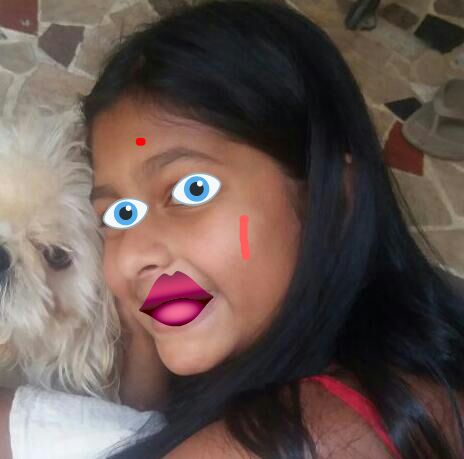
I once joked about how my little girl’s growing teeth looked… till, one day, she stopped smiling altogether. Exasperated, she said – “Stop it. I don’t even know how to smile anymore!” I was crushed. Her identity was being defined by her still-forming teeth. Imagine what a horrific cartoon representation that would make.
And while the physicalities do define us, should it be our only ‘identity’? As kids grow older, they start seeing the differences between them and the others (“I wish I had curly hair/peach skin/long nails”) and their own attributes – not usually in a good light. Stay with me. I have a point,
The physical attributes and how they’re viewed, in my opinion, is something parents can control – build up, accept, celebrate what you can’t change. And this helps how?
Experts say How we respond to our children’s successes, actions and blunders shapes identity. Our words, even when disapproving, need to build, not tear down. Showing love, actually demonstrating in a way a child can understand (hug, smile, gift, kind word, encouraging note, time spent with) forms positive identity, PLUS gives you a child who knows how to receive and importantly, give love. They also say, you can’t give love if you don’t know what it is i.e. have never received it. Straightforward. And arrow-like.
So I say today, start the cycle. Pay it forward. You can change the world, one smile at a time. Isn’t that an empowering thought? Want more ideas to work on? www.parentfurther.com has a list of ideas age-wise that can help build positive identity. For example, while dealing with a 2-3 year-old, focusing on behaviour, not blame, is an idea. Fostering pride in cultural heritage is best introduced at 4-5 years. Encouraging your child to explore areas of ability and interest is a great way to build identity at that age.
We seem to often do all this as they’re younger and concentrate more on grades as they grow older. Time to think about it.
And I wonder if allowing kids to compare themselves with others (as opposed to immediately disapproving), budgeting for a yo-yoing self esteem as the tweenage years kick in, and continuing to give encouragement and support is key.
‘Support’ – not agreement with their every word/action is important too. And support in the sense of being their rocks, their grounding. Knowing you have parents to fall back on gives one the confidence and positivity to move forward. Don’t worry about that being misused. Good seeds grow green.
Here’s what I’m taking away from this – love, support, give time, smile.
All this, after we parents have our own identity sorted. So let’s start there.
This column was first published in the Bangalore Mirror in July 2014
 myuncommonsense